Why Choose a Specialized Metal Roofing Contractor for Your Ontario Home
A metal roof is a long-life building system, so the installer should understand more than how to fasten panels. Material selection, roof geometry, thermal movement, ventilation, underlayment, flashing, valleys, penetrations, trim fabrication, and finishing all influence long-term performance.
That is why specialization matters. An Ontario metal roofing contractor should be able to explain the full assembly in practical language, show evidence of comparable work, and provide a quotation detailed enough for the homeowner to understand what is actually being built.
Specialization starts with system knowledge
Metal roofing profiles are not interchangeable. Standing seam uses a different fastening and seam concept from tile-style systems such as Monterey. Roof slope, panel length, substrate, roof shape, drainage, and architectural goals influence which system is appropriate.
A specialist should be able to connect those variables. The recommendation should sound like a roof-specific explanation, not a generic sales script.
A specialist should know the material, not just the colour
Roofing steel has measurable properties. Gauge or thickness, galvanizing, coating system, manufacturer, origin, and traceability all help define the product. Homeowners should be able to ask what steel will arrive on the project and receive a specific answer.
MROOF's material approach uses traceable ThyssenKrupp roofing steel and identifiable production information as a trust standard. This makes the material easier to verify and compare.
Roof preparation should be chosen for the actual home
The existing roof and structure determine the starting point. Some homes need additional work to create a straight, stable installation surface. Others may require different underlayment, membrane, strapping, or substrate decisions. A contractor should assess those conditions professionally and explain the selected approach.
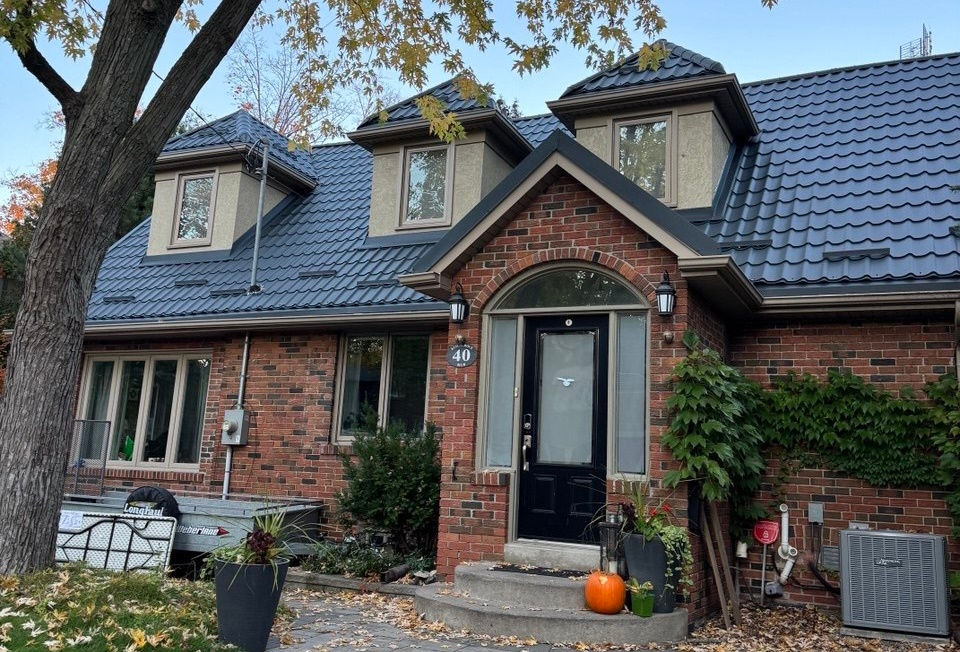
MROOF's Kitchener home-and-garage project documents how double wood strapping was used to create a consistent base across the house and garage before the Monterey metal system was completed. The project also included ridge ventilation and snow-retention planning above the driveway.
Ventilation knowledge is part of roofing knowledge
A long-life metal roof should be integrated with a healthy attic and building envelope. Controlled airflow helps manage heat and moisture and supports stable structural conditions. The contractor should understand how intake, exhaust, insulation, roof shape, and existing vents relate to the new assembly.
This does not mean every roof uses exactly the same vent layout. It means ventilation should be intentionally evaluated rather than ignored.
Flashing and custom details reveal the installation standard
Large field panels are repetitive. Roof details are not. Valleys, skylights, chimneys, sidewalls, lower roofs, additions, gable ends, eaves, and penetrations require custom planning and fabrication.
A specialist metal roofing contractor should be able to show how these details are handled within the selected profile. When a quote is vague about flashings and transitions, the homeowner does not yet have a complete basis for comparison.
Real project evidence is more useful than broad claims
Statements such as "experienced," "premium," and "high quality" should be backed by something observable. Project documentation is one of the best forms of proof because it connects the claim to an installed roof.
The MROOF projects library shows roof area, location, material, profile, colour, project scope, installation stages, and finished results across Ontario. Homeowners can compare Standing Seam, Monterey, multi-unit work, solar-ready projects, and new construction before deciding.
A professional quotation should make the scope clear
A specialist contractor should not force the homeowner to guess what is included. A clear quotation should identify the major components and assumptions that affect price and performance.
Roofing profile and material specification
Steel gauge or thickness and coating information
Underlayment or waterproofing layer
Roof preparation and support assembly
Ventilation scope
Flashing and trim details
Skylights, chimneys, penetrations, and wall transitions
Tear-off or existing-roof assumptions where applicable
Project schedule and site logistics
Warranty and documentation terms that can be verified
Written exclusions or conditions that could change the final scope
Communication is part of the professional standard
Homeowners should know who is responsible for the project, what will happen next, how changes are handled, and where material and scope information is recorded. Transparent communication reduces uncertainty and makes it easier to evaluate the contractor on facts rather than promises.
Questions worth asking a metal roofing contractor
Which exact metal profile are you recommending, and why does it fit this roof?
What steel specification and coating system are included?
Can the material manufacturer and production information be verified?
How will the roof be prepared before panels are installed?
How is ventilation addressed in the proposed assembly?
Which flashings and transition details are included?
Can you show completed projects using a comparable system?
What is excluded from the written price?
Who handles project changes if hidden conditions alter the scope?
Key takeaways
Metal roofing specialization is about system knowledge, not only panel installation.
Material quality should be specific and verifiable.
Ventilation, underlayment, and flashing are core parts of the roof.
Project proof should show comparable real work.
A professional quote should clearly define what the homeowner is buying.
Transparent communication supports a better long-term customer experience.
Specialization should change the first conversation
A specialist contractor should ask questions that relate to the roofing system, not just the roof size. The discussion should cover the homeowner's long-term goals, preferred architecture, future solar or renovation plans where relevant, existing ventilation, known roof modifications, skylights or chimneys, and any sections of the property that require special coordination. Those inputs help determine which system makes sense before a final quotation is prepared.
The homeowner should also be able to ask technical questions and receive clear explanations without being pushed into a specific product. An expert answer connects a recommendation to the home: why this profile, why this preparation, why this ventilation approach, and why these flashing details. That educational process is a practical sign of specialization.
Project handoff should leave the homeowner with clarity
Professional installation should end with a clear understanding of what was completed. Relevant material information, project documentation, warranty records, and final scope should be organized so the homeowner does not have to reconstruct the project years later. A premium roof is a long-term asset, and the project record should reflect that lifecycle.
Frequently asked questions
Why choose a contractor that specializes in metal roofing?
Metal roofing requires system-specific knowledge of materials, profiles, fastening, thermal movement, ventilation, underlayment, flashing, fabrication, and finish details.
What should a metal roofing contractor explain before installation?
The contractor should explain the selected profile and material, preparation, underlayment, ventilation, major flashing details, project scope, schedule assumptions, and how the system fits the property.
How can homeowners verify contractor experience?
Review detailed completed projects, material specifications, real project photography, customer reviews, and examples that match the roof type or system being considered.
Should every metal roofing quote use the same installation method?
No. The appropriate system depends on roof geometry, existing conditions, panel profile, slope, ventilation, substrate, details, and manufacturer requirements.
What does MROOF document on project pages?
MROOF project pages commonly identify location, roof area, material, design, colour, installation stages, project considerations, final result, and customer feedback.
Choose the system before you choose the installer
Review MROOF projects, compare metal roofing options, and request a project-specific assessment when you are ready to discuss your home.